
En la India, un mercado con más de 600 millones de usuarios de Internet, los pagos digitales están reconfigurando el panorama comercial a un ritmo sin precedentes. Para las empresas internacionales que desean entrar o expandirse en la India, el éxito de la integración de los pagos determina directamente los resultados del desarrollo del mercado. Sin embargo, la complejidad del entorno de pagos de la India representa a menudo el principal obstáculo para las empresas mundiales.
Principales características y retos del mercado de pagos indio
El sistema de pagos digitales de la India presenta características locales distintivas. La Interfaz Unificada de Pagos (UPI) se ha convertido en el método de pago dominante, procesando más de 10.000 millones de transacciones mensuales, lo que representa casi 70% del volumen de pagos digitales. Detrás de esta rápida adopción se encuentra la fuerte demanda de los usuarios indios de inmediatez, comodidad y transacciones de bajo coste.
Sin embargo, las empresas internacionales se enfrentan a múltiples retos a la hora de integrarse en el sistema de pagos indio:
- Complejidad técnica: Los sistemas UPI están profundamente integrados en la infraestructura bancaria nacional de la India, lo que requiere capacidades técnicas de integración especializadas.
- Requisitos de conformidad: Requisitos normativos estrictos y en continua evolución del Banco de la Reserva de la India (RBI) y la Ley de Gestión de Divisas (FEMA).
- Necesidades de localización: Los hábitos de pago, las preferencias lingüísticas y la diversidad de dispositivos de los usuarios indios requieren una optimización específica.
- Volatilidad de la tasa de éxito: Las condiciones de la red, los sistemas bancarios y las pautas de comportamiento de los usuarios influyen en el porcentaje global de éxito de los pagos.
Elementos básicos de las soluciones profesionales de aceptación de pagos en la India
Ventajas de la arquitectura técnica nativa
La verdadera integración nativa de UPI va más allá de la simple conectividad API: representa la conexión directa a la infraestructura de la Corporación Nacional de Pagos de la India (NPCI). Esta arquitectura evita retrasos adicionales y puntos únicos de fallo asociados a proxies de terceros, garantizando la máxima estabilidad del canal y una latencia mínima.
La aplicación abarca tres niveles críticos:
- Capa de infraestructura: Clústeres de servidores desplegados localmente en la India que garantizan un acceso de baja latencia.
- Capa de optimización de enrutamiento: Sistemas inteligentes de decisión sobre rutas basados en el análisis de datos en tiempo real
- Capa de riesgo y cumplimiento: Controles de seguridad de extremo a extremo que cumplen los requisitos del RBI
Enfoques sistemáticos para optimizar la tasa de éxito
La mejora de la tasa de éxito de los pagos no es el resultado de mejoras técnicas singulares, sino de una optimización sistemática:
- Selección dinámica de rutas: Selección óptima de la vía de procesamiento en función del estado del sistema bancario en tiempo real
- Mecanismos inteligentes de reintento: Estrategias de reintento diferenciadas para distintos tipos de fallos
- Optimización de la experiencia del usuario: Procesos racionalizados con interfaces multilingües y orientaciones claras
Cumplimiento profesional y garantía de seguridad
En el mercado indio, el cumplimiento no es opcional, sino obligatorio. Las soluciones profesionales deben incluir:
- Amplia cobertura normativa: Cumplimiento simultáneo de las especificaciones técnicas del RBI, la FEMA y la NPCI.
- Localización de datos: Cumplimiento estricto de la normativa india sobre protección de datos
- Certificaciones de seguridad: Normas de seguridad internacionales como la certificación PCI DSS
- Actualizaciones continuas del cumplimiento: Equipos profesionales que supervisan los cambios normativos para garantizar el cumplimiento a largo plazo
Consideraciones profesionales para aplicaciones industriales
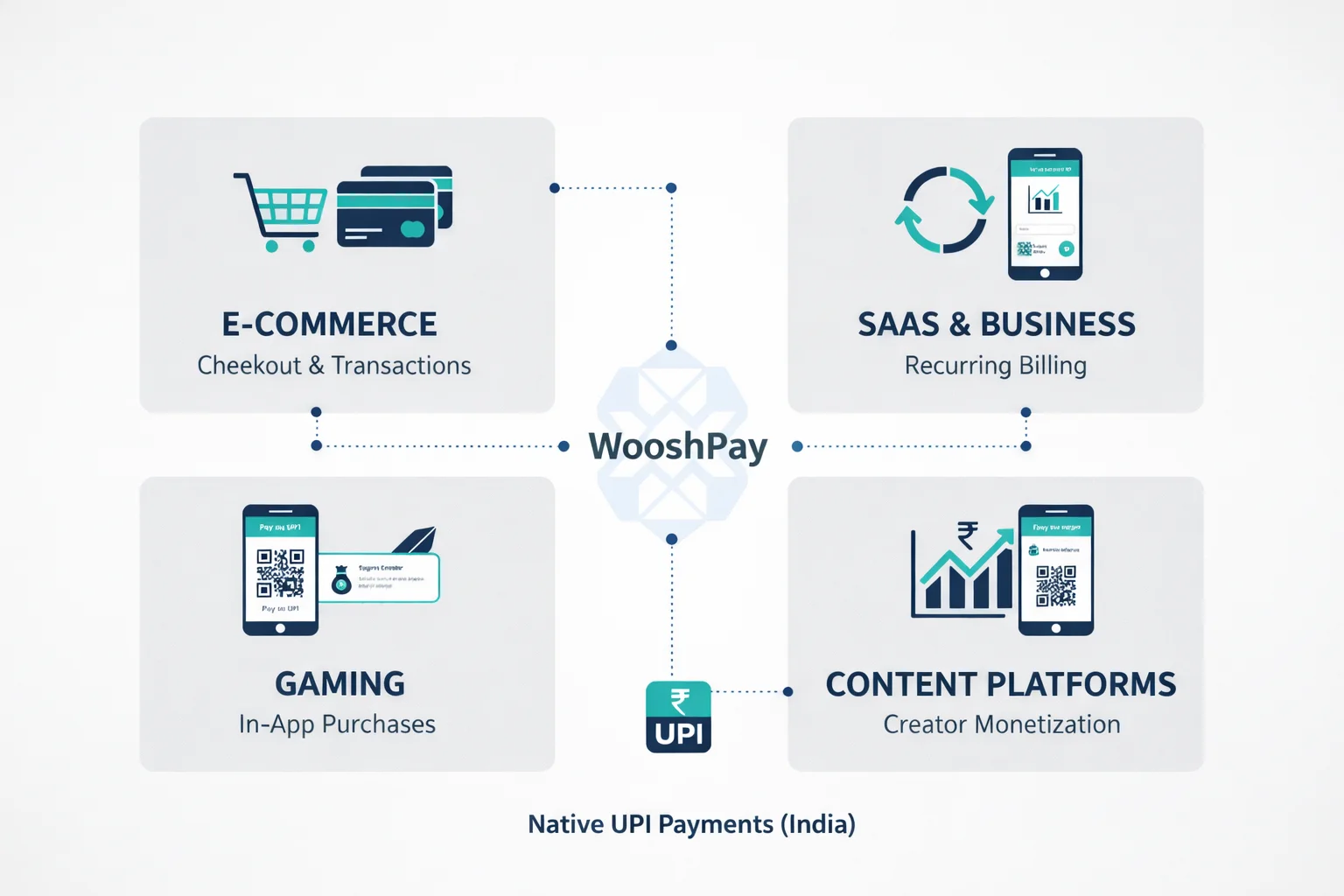
Los distintos sectores tienen necesidades específicas en materia de soluciones de pago:
Las plataformas de comercio electrónico requieren
- Capacidad de fijación de precios y liquidación multidivisa
- Procesos eficaces de devolución y resolución de litigios
- Optimización de la conversión carro-pago
Los proveedores de servicios SaaS y empresariales priorizan
- Estabilidad de la facturación de suscripciones periódicas
- Funciones de facturación y conciliación de nivel empresarial
- Capacidad de procesamiento de transacciones masivas
Valor de los contenidos digitales y las plataformas de juego
- Eficacia de los pagos de escasa cuantía y alta frecuencia
- Funciones de reparto de ingresos y liquidación en tiempo real
- Prevención del fraude y mecanismos de protección de menores
Criterios clave para la selección de socios profesionales
A la hora de evaluar a los proveedores indios de soluciones de pago, tenga en cuenta estas dimensiones:
- Verificación de la capacidad técnica
- Pruebas de integración nativa del UPI
- Datos históricos sobre la tasa media de éxito de los pagos
- Disponibilidad del sistema y capacidad de recuperación en caso de catástrofe
- Revisión de la calificación de conformidad
- Autorización de las autoridades reguladoras financieras locales
- Certificaciones de seguridad de datos y protección de la intimidad
- Registros de cumplimiento e informes de auditoría anteriores
- Sistema de apoyo operativo
- Tamaño y capacidad de respuesta de los equipos locales de asistencia técnica
- Exhaustividad de la documentación y los recursos para desarrolladores
- Profundidad y amplitud de los casos de éxito de los clientes
- Transparencia de las condiciones comerciales
- Claridad y razonabilidad de las tarifas
- Seguridad y fiabilidad de los ciclos de liquidación
- Equidad y flexibilidad de las condiciones contractuales
Conclusiones: Garantizar el crecimiento de la India con una infraestructura de pagos profesional
El rápido crecimiento del mercado de pagos digitales de la India presenta oportunidades sin precedentes. La solución profesional de aceptación de pagos de WooshPay proporciona una infraestructura tecnológica de pagos fiable a través de la integración nativa de UPI, la optimización sistemática de la tasa de éxito y la garantía de cumplimiento integral. La elección de socios de pago profesionales transforma el pago de un riesgo potencial en una ventaja competitiva, lo que permite a las empresas centrarse en la innovación de productos y la expansión del mercado. En el mercado de rápido crecimiento de la India, las soluciones de pago profesionales y eficientes se han convertido en requisitos esenciales para el éxito de la implantación empresarial.