
Global commerce increasingly rewards businesses that adapt to local infrastructure over standardised expansion models
By Zhiguo Ma
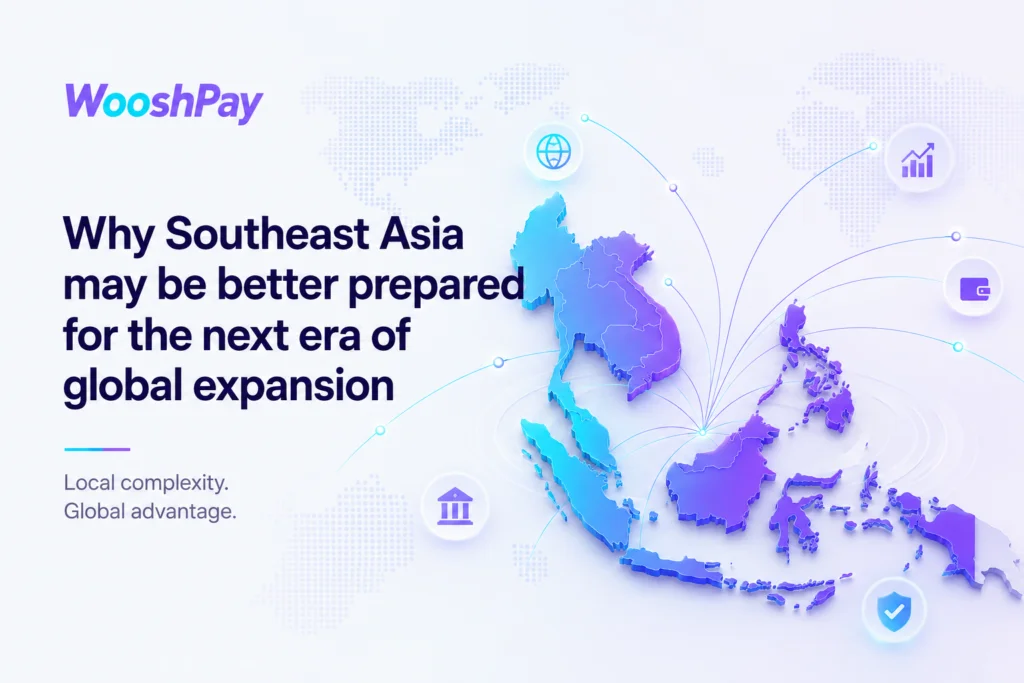
For companies headquartered in Europe or North America, the fragmentation of global commerce often feels like a recent development. Trade tensions have become more pronounced. Governments have embraced industrial policy. Data is increasingly regulated within national borders. Artificial intelligence is being governed through different legal frameworks. Markets that once appeared to be converging are beginning to look distinct once again.
For businesses in Southeast Asia, however, this is hardly new.
Companies expanding across ASEAN have never had the luxury of treating the region as a single market. Eleven countries, multiple legal systems, different currencies, dozens of languages and highly varied consumer behaviour have always required businesses to adapt rather than standardise. Success has depended less on finding one regional strategy than on understanding how each market works on its own terms.
For years, this complexity was often seen as one of Southeast Asia’s disadvantages. Compared with the scale of China or the relative uniformity of the United States, ASEAN looked fragmented.
The shift has been gradual enough to escape notice, but significant enough to reshape how businesses expand internationally.
The conditions that once made Southeast Asia unusually complicated increasingly resemble the conditions under which international businesses now operate almost everywhere. Markets remain open. Consumers remain willing to buy across borders. Yet the infrastructure that supports commerce is becoming progressively more local.
Perhaps nowhere is this more visible than in payments.
Over the past decade, countries around the world have invested heavily in domestic payment infrastructure. India’s Unified Payments Interface has transformed retail payments for hundreds of millions of people. Brazil’s Pix has become one of the world’s most successful instant payment systems. Singapore’s 支付宝 has fundamentally changed expectations around bank transfers. Similar developments are taking place across Southeast Asia, the Gulf and elsewhere.
These systems were not built to isolate domestic economies. Quite the opposite. They reduce costs, improve efficiency and make everyday commerce easier. Their success comes precisely from reflecting local consumer behaviour, banking systems and regulatory priorities.
The consequence, however, is that businesses expanding internationally no longer encounter a common financial infrastructure. They encounter a growing number of highly successful local ones.
This is not merely a change in technology. It is a change in how markets function.
For much of the internet era, global expansion assumed that technology would gradually erase national differences. Businesses could build a product once, connect to a handful of international platforms and expect broadly similar operating conditions from one market to another.
Businesses are now expanding under a different set of conditions.
Consumers increasingly expect payment methods they already know rather than international alternatives. Governments are introducing their own approaches to digital identity, artificial intelligence, cloud infrastructure and data governance. Software companies are adapting products to local compliance requirements rather than global norms. What was once considered localisation at the margins is becoming central to how businesses operate.
From our vantage point building cross-border payment infrastructure, one pattern has become increasingly clear. Companies rarely struggle to identify demand. By the time they enter a new market, they usually understand the commercial opportunity. What proves more difficult is everything that follows.
Expansion discussions that once focused on market size increasingly revolve around operational questions. Which payment methods do customers actually trust? How should funds move between jurisdictions? How will finance teams reconcile transactions generated across different banking systems? What local regulatory requirements sit behind what appears, to consumers, to be a simple checkout?
These questions are not unique to payments. Payments simply expose them first.
Every transaction depends on infrastructure that most consumers never see. When those systems differ from market to market, businesses discover very quickly that international expansion has become less about crossing borders than about navigating institutions. The same reality is now emerging across artificial intelligence, cloud computing and digital regulation. Rather than converging around a single global model, countries are building systems that reflect domestic priorities while remaining connected to international commerce.
It would be easy to describe this as deglobalisation, but that risks misunderstanding what is actually happening.
Global trade has not stopped. Capital continues to move internationally. Companies remain ambitious about overseas growth. What has changed is not the willingness to do business across borders, but the infrastructure through which business is conducted.
Global commerce is becoming more interconnected, but less standardised.
That is a subtle distinction, yet it changes the nature of international expansion. Market access can no longer be understood simply by measuring consumer demand or economic growth. Businesses must also ask whether they understand the systems through which a market actually functions. Infrastructure, once treated as an implementation detail, increasingly determines whether expansion succeeds.
This is where Southeast Asia’s experience becomes unusually relevant.
Businesses in the region have spent decades learning to operate across different payment systems, regulatory environments, banking networks and consumer expectations. What was often regarded as fragmentation increasingly looks like practical experience for a world where local systems coexist rather than converge.
The lesson is not that Southeast Asia offers a model the rest of the world should copy. Its diversity is the product of its own history and institutions. The lesson is that successful international businesses may need to think more like Southeast Asian ones have always done: assuming difference rather than uniformity, adapting rather than imposing, and treating local infrastructure not as an obstacle but as part of the market itself.
For years, companies expanding internationally asked a simple question: Is there demand?
Increasingly, another question belongs alongside it.
Can we operate within the infrastructure our customers already trust?
The answer to that question may prove just as important in determining which businesses succeed in the next phase of global commerce.
Zhiguo Ma is the Founder and CEO of WooshPay.
This article was orignially published on e27 on 30 July 2026.